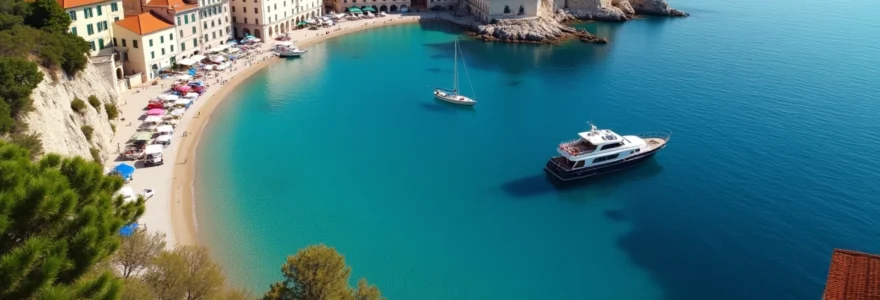
Croatia’s Adriatic coastline is a treasure trove of ancient cities, sun-drenched islands, and rich maritime heritage. From the iconic walls of Dubrovnik to the hidden coves of Mljet, this stunning stretch of shoreline offers a captivating blend of history, culture, and natural beauty. The region’s diverse landscapes, influenced by centuries of Roman, Venetian, and Habsburg rule, create a unique tapestry that continues to enchant visitors from around the world.
Dalmatian coast’s historical coastal towns
The Dalmatian Coast is dotted with picturesque towns that showcase Croatia’s vibrant past. Each settlement tells a story of empires, trade, and resilience, offering visitors a chance to step back in time while enjoying modern amenities.
Dubrovnik: pearl of the adriatic and UNESCO world heritage site
Dubrovnik, often called the “Pearl of the Adriatic,” is a city that needs little introduction. Its imposing stone walls, which have stood for centuries, encircle a perfectly preserved medieval old town. As you walk along the city’s main thoroughfare, the Stradun, you’ll be transported to a world of Baroque churches, elegant palazzi, and bustling squares.
The city’s UNESCO World Heritage status is well-deserved, with highlights including the Rector’s Palace, Sponza Palace, and the iconic Onofrio’s Fountain. For the best views of the terracotta rooftops and the azure Adriatic beyond, take a stroll along the city walls – a 2-kilometre circuit that offers unparalleled vistas and photo opportunities.
Dubrovnik is not just a collection of historical buildings; it’s a living, breathing testament to the endurance of human creativity and resilience.
Split: diocletian’s palace and roman architecture
Split, Croatia’s second-largest city, is centred around the remarkable Diocletian’s Palace. Built in the 4th century AD as a retirement home for the Roman Emperor Diocletian, this vast complex now forms the heart of Split’s old town. Unlike many ancient ruins, Diocletian’s Palace remains a living, breathing part of the city, with shops, cafes, and homes nestled within its ancient walls.
The Palace’s peristyle (central square) is a marvel of Roman architecture, flanked by impressive columns and the Cathedral of Saint Domnius. As you explore Split’s narrow streets and hidden courtyards, you’ll discover a unique blend of ancient history and modern life that characterises this vibrant coastal city.
Zadar: sea organ and roman forum
Zadar offers a perfect blend of ancient history and modern innovation. The city’s Roman Forum, founded by Emperor Augustus, stands as a testament to its ancient roots. Nearby, the 9th-century Church of St. Donatus, with its distinctive circular shape, adds to the city’s historical charm.
However, it’s Zadar’s modern attractions that truly set it apart. The Sea Organ, an architectural sound art object, uses the movement of the sea to create haunting melodies. Adjacent to this, the Sun Salutation, a circular solar panel installation, collects the sun’s energy during the day to create a mesmerising light show at night.
Trogir: venetian-era old town
Trogir, often described as a miniature version of Venice, is a small island town connected to the mainland by bridges. Its Venetian-era old town is a UNESCO World Heritage site, boasting some of the best-preserved Romanesque-Gothic architecture in Central Europe.
The town’s centrepiece is the Cathedral of St. Lawrence, featuring the stunning Portal of Radovan, a masterpiece of Romanesque sculpture. As you wander through Trogir’s narrow streets, you’ll encounter elegant palaces, charming squares, and the imposing Kamerlengo Fortress, offering panoramic views of the surrounding islands.
Croatian Island-Hopping destinations
Croatia’s coastline is dotted with over a thousand islands, each offering its own unique charm and attractions. From lavender-covered fields to secluded beaches, island-hopping in Croatia is an adventure in itself.
Hvar: lavender fields and venetian fortress
Hvar, often dubbed the “queen of the Dalmatian islands,” is renowned for its vibrant nightlife, picturesque lavender fields, and historical sites. The town of Hvar, with its marble streets and Gothic palaces, is a testament to centuries of Venetian influence.
Towering above the town, the Spanjola Fortress offers breathtaking views of the Pakleni Islands. In the island’s interior, vast lavender fields paint the landscape purple in summer, filling the air with their soothing fragrance. Hvar’s combination of natural beauty, historical sites, and lively atmosphere makes it a must-visit destination on any Croatian island-hopping itinerary.
Korčula: alleged birthplace of marco polo
Korčula, with its herringbone street pattern designed to provide shelter from the wind, is often called “Little Dubrovnik.” The island claims to be the birthplace of the famous explorer Marco Polo, and you can visit a house said to be his childhood home.
The island’s main town, also called Korčula, is a masterpiece of medieval architecture. Its narrow streets, lined with Gothic and Renaissance buildings, lead to charming squares and ancient churches. Don’t miss the nightly performance of the Moreška , a traditional sword dance that has been performed on the island for centuries.
Brač: golden horn beach and limestone quarries
Brač is home to one of Croatia’s most famous beaches, Zlatni Rat (Golden Horn). This unique spit of land changes shape with the currents and winds, creating a constantly evolving landscape. The island is also known for its high-quality limestone, which has been used in buildings around the world, including parts of the White House in Washington, D.C.
The picturesque town of Bol, with its waterfront promenade and charming stone houses, is a perfect base for exploring the island. For panoramic views of the surrounding islands and mainland, hike or drive to the summit of Vidova Gora, the highest peak in the Adriatic islands.
Mljet: national park and benedictine monastery
Mljet, often referred to as Croatia’s greenest island, is a nature lover’s paradise. A third of the island is covered by Mljet National Park, home to two saltwater lakes and lush Mediterranean vegetation. In the middle of the larger lake sits a small island housing a 12th-century Benedictine monastery, accessible by a short boat ride.
The island’s unspoiled beauty, with its dense forests and crystal-clear waters, offers a tranquil escape from the busier tourist destinations. Hiking and cycling trails crisscross the island, allowing visitors to immerse themselves in Mljet’s natural wonders.
Istrian peninsula’s coastal gems
The heart-shaped Istrian Peninsula in northern Croatia offers a different flavour of coastal charm, with its Italian-influenced culture and picturesque hilltop towns. The region’s coastline boasts several gems that shouldn’t be missed on any Croatian coastal tour.
Rovinj: venetian-style old town and st. euphemia’s church
Rovinj, with its colourful Venetian-style houses clustered on a small peninsula, is often considered one of the most picturesque towns in Croatia. The old town is a maze of cobbled streets leading up to the Church of St. Euphemia, whose towering bell tower dominates the skyline.
Art lovers will appreciate Rovinj’s thriving gallery scene, while food enthusiasts can sample some of Istria’s renowned culinary delights, including truffles and olive oil. The town’s charming harbour, lined with cafes and restaurants, is the perfect spot to watch the sunset over the Adriatic.
Pula: roman amphitheatre and temple of augustus
Pula, Istria’s largest city, is home to some of the best-preserved Roman ruins outside Italy. The city’s crown jewel is its magnificent Roman amphitheatre, known as the Pula Arena. Built in the 1st century AD, it’s one of the largest surviving Roman arenas in the world and still hosts concerts and events today.
In the heart of the old town, the well-preserved Temple of Augustus stands as another testament to Pula’s Roman heritage. The city’s bustling marketplace and lively cafe scene provide a modern contrast to its ancient monuments, creating a unique blend of past and present.
Poreč: UNESCO-listed euphrasian basilica
Poreč, with its compact old town situated on a small peninsula, is home to one of Croatia’s most important historical monuments: the Euphrasian Basilica. This 6th-century church complex, a UNESCO World Heritage site, is renowned for its stunning Byzantine mosaics that rival those found in Ravenna, Italy.
Beyond the basilica, Poreč offers a delightful mix of Roman, Gothic, and Baroque architecture. Its decumanus maximus (main street) follows the original Roman street plan, lined with shops and cafes that bring ancient history to life.
Maritime history and nautical tourism
Croatia’s long and indented coastline has shaped its history and culture for millennia. From ancient seafaring traditions to modern marinas, the country’s maritime heritage continues to play a crucial role in its identity and economy.
Ancient illyrian and greek maritime traditions
Long before the Romans arrived, the Illyrians and Greeks were navigating the Adriatic waters off Croatia’s coast. The Illyrians, skilled sailors and traders, established settlements along the coast and on many islands. Greek colonists followed, founding important trading posts such as Issa (modern-day Vis) and Pharos (Hvar).
These early maritime cultures laid the foundation for Croatia’s seafaring tradition, developing shipbuilding techniques and trade routes that would be used for centuries to come. Today, archaeological sites and museums along the coast offer glimpses into this ancient maritime world.
Venetian republic’s influence on coastal architecture
The Venetian Republic’s long rule over much of Croatia’s coast left an indelible mark on its architecture and urban planning. Venetian-style palaces, loggias, and fortifications can be found in almost every coastal town, from Rovinj in Istria to Korčula in southern Dalmatia.
The Venetians also influenced shipbuilding techniques, introducing new types of vessels that were well-suited to the Adriatic’s conditions. This maritime legacy is celebrated in museums like the Croatian Maritime Museum in Split, which houses an impressive collection of ship models and nautical instruments.
Modern marinas: ACI marina network
Today, Croatia’s coastline is dotted with modern marinas catering to the booming nautical tourism industry. The ACI (Adriatic Croatia International Club) Marina network, with 22 marinas along the coast, provides state-of-the-art facilities for yachts and sailboats.
These marinas not only offer safe harbours and essential services for boaters but also serve as gateways to exploring Croatia’s coastal towns and islands. Many are located near historical sites or natural attractions, allowing sailors to combine their love of the sea with cultural and natural experiences.
Blue flag beaches: environmental standards and tourism
Croatia’s commitment to sustainable tourism is evident in its numerous Blue Flag beaches. This international certification recognises beaches that meet strict criteria for water quality, environmental management, safety, and services.
As of 2021, Croatia boasts over 100 Blue Flag beaches, reflecting the country’s dedication to preserving its coastal environment while promoting responsible tourism. These beaches not only offer pristine swimming conditions but also serve as models for sustainable coastal management.
Culinary journey along the adriatic
Croatia’s Adriatic coast offers a culinary landscape as diverse and captivating as its geography. From cured meats and artisanal cheeses to fresh seafood and world-class wines, the region’s gastronomy reflects its rich cultural heritage and bountiful natural resources.
Dalmatian pršut and pag cheese
Dalmatian pršut , a dry-cured ham similar to Italian prosciutto, is a staple of coastal Croatian cuisine. The ham is typically air-dried in the bura , a cold north-easterly wind, giving it a distinctive flavour. Paired with a slice of crusty bread and a glass of local wine, pršut makes for a perfect Dalmatian appetizer.
Equally renowned is Pag cheese, produced on the island of Pag. The island’s unique microclimate, with salty winds coating the vegetation, gives the milk from Pag sheep a distinctive flavour. The resulting cheese is hard, full-flavoured, and often compared to fine Italian Pecorino.
Istrian truffles and malvazija wine
The Istrian peninsula is famous for its truffles, particularly the prized white truffle found in the forests around Motovun. These aromatic fungi feature prominently in Istrian cuisine, shaved over pasta, risotto, or even scrambled eggs.
Istria is also home to some of Croatia’s finest wines. The Malvazija Istarska grape produces crisp white wines with notes of acacia and apricot, perfectly complementing the region’s seafood dishes. For red wine lovers, the robust Teran offers a perfect pairing for Istria’s hearty meat dishes.
Fresh seafood: grilled fish and buzara-style shellfish
With its long coastline, it’s no surprise that seafood plays a starring role in Croatian cuisine. Grilled fish, simply prepared with olive oil, garlic, and herbs, is a staple on menus from Istria to Dubrovnik. Look for local specialties like škarpina (scorpion fish) or orada (sea bream).
Shellfish lovers shouldn’t miss the chance to try buzara , a traditional method of preparing mussels, shrimp, or scampi. The shellfish are cooked in a sauce of white wine, garlic, breadcrumbs, and parsley, creating a dish that perfectly captures the flavours of the Adriatic.
Olive oil production: from ancient times to modern PDOs
Olive cultivation in Croatia dates back to ancient times, with some trees on the island of Brijuni estimated to be over 1,600 years old. Today, Croatian olive oils, particularly those from Istria, are gaining international recognition for their quality.
Several Croatian olive oils have been awarded Protected Designation of Origin (PDO) status by the European Union, recognising their unique characteristics tied to specific geographical areas. These oils, with their distinctive peppery finish, are integral to coastal Croatian cuisine and make for excellent souvenirs.
As you explore Croatia’s Adriatic coast, from its historic towns to its sun-drenched islands, you’ll discover a region where history, nature, and culture intertwine to create an unforgettable experience. Whether you’re wandering through ancient Roman ruins, sailing between idyllic islands, or savoring local delicacies, the Croatian coast offers a journey that engages all the senses and leaves visitors longing to return.