Morocco’s vast Sahara Desert beckons adventurers with its golden dunes, starlit skies, and rich nomadic culture. Guided desert excursions offer a unique opportunity to immerse oneself in this awe-inspiring landscape while benefiting from expert knowledge and carefully planned itineraries. From navigating rugged mountain passes to learning ancient survival techniques, these journeys provide an unparalleled blend of excitement, cultural insight, and natural wonder.
Sahara desert expedition routes: from marrakech to merzouga
The journey from Marrakech to Merzouga is a classic Sahara Desert expedition route that showcases Morocco’s diverse landscapes. This multi-day adventure typically spans 350-400 kilometres, taking travellers through the High Atlas Mountains, past ancient kasbahs, and into the heart of the Sahara. The route is carefully designed to balance driving time with immersive experiences, allowing visitors to fully appreciate the changing scenery and cultural nuances of each region.
One of the most captivating aspects of this expedition is the gradual transition from the bustling city of Marrakech to the serene emptiness of the desert. As you progress eastward, the landscape shifts dramatically from lush mountain valleys to arid plateaus, and finally to the towering sand dunes of Erg Chebbi near Merzouga. This visual journey serves as a powerful reminder of Morocco’s geographical diversity and the adaptability of its people.
Experienced guides play a crucial role in these expeditions, sharing historical context, pointing out geological features, and facilitating interactions with local communities along the way. Their expertise ensures that travellers not only witness the beauty of the landscape but also gain a deeper understanding of the region’s complex ecosystem and cultural heritage.
4×4 Off-Road adventures through atlas mountains
The Atlas Mountains present a formidable yet exhilarating challenge for desert expeditions. 4×4 vehicles are essential for navigating the rugged terrain, offering both the capability to handle difficult passages and the comfort needed for long-distance travel. These off-road adventures provide an adrenaline rush while showcasing some of Morocco’s most spectacular mountain scenery.
Tizi n’tichka pass: navigating High-Altitude terrain
The Tizi n’Tichka Pass, at an elevation of 2,260 metres, is a highlight of many Sahara Desert expeditions. This winding mountain road offers breathtaking views of the High Atlas range and serves as a crucial link between Marrakech and the pre-Saharan regions. Navigating this pass requires skill and experience, as weather conditions can change rapidly, and the road features numerous hairpin turns.
Travellers often describe the ascent of Tizi n’Tichka as a thrilling experience, with each turn revealing new vistas of snow-capped peaks and deep valleys. The pass also provides an opportunity to observe the gradual change in vegetation and architecture as one transitions from the Mediterranean climate of the north to the arid conditions of the south.
Ait benhaddou: UNESCO world heritage site exploration
A jewel along the desert expedition route, Ait Benhaddou is a fortified village that stands as a testament to traditional Moroccan architecture. This UNESCO World Heritage site has been featured in numerous films and television shows, thanks to its well-preserved mud-brick buildings and dramatic setting against the backdrop of the Atlas Mountains.
Guided tours of Ait Benhaddou offer insights into the historical significance of these fortified villages, known as ksour , which once served as crucial waypoints for caravans crossing the Sahara. Visitors can explore the narrow alleyways, climb to panoramic viewpoints, and learn about the ongoing conservation efforts to maintain this living museum of Moroccan heritage.
Dades gorge: tackling serpentine mountain roads
The Dades Gorge presents one of the most challenging and visually striking segments of the journey to the Sahara. Known for its serpentine road that winds through towering red rock formations, this section of the expedition tests the skills of even the most experienced drivers. The dramatic landscape, carved by the Dades River over millions of years, offers a stark contrast to the flat expanses of the desert that lie ahead.
Guided expeditions often include stops at strategic viewpoints along the Dades Gorge, allowing travellers to fully appreciate the scale and beauty of this natural wonder. The area is also known for its traditional Berber villages, perched precariously on the cliffs, providing a glimpse into the resilient lifestyle of Morocco’s mountain communities.
Todgha gorge: canyoneering in limestone cliffs
The Todgha Gorge, with its soaring limestone cliffs reaching heights of up to 300 metres, offers a unique opportunity for canyoneering enthusiasts. This natural marvel is not only a visual spectacle but also a playground for adventure seekers. Guided canyoneering experiences in Todgha Gorge combine elements of hiking, climbing, and sometimes even swimming through the narrow passages carved by the Todgha and Dades Rivers.
Expert guides lead participants through the gorge, pointing out geological features and sharing stories of the area’s significance to local Berber communities. The experience of navigating these towering canyons provides a profound sense of the raw power of nature and serves as a dramatic contrast to the open expanses of the Sahara that await further east.
Camel trekking techniques in erg chebbi dunes
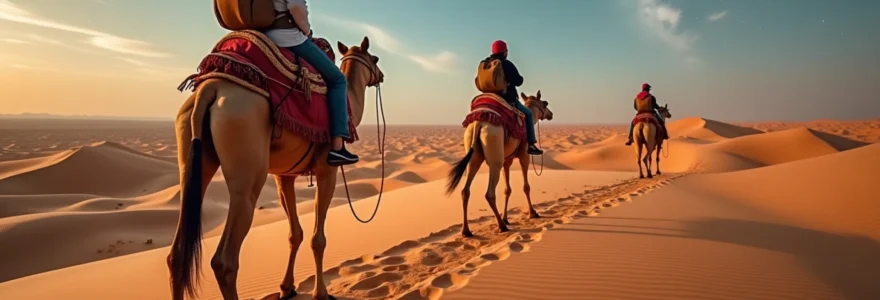
Camel trekking through the Erg Chebbi dunes is often considered the pinnacle of Sahara Desert expeditions. This ancient mode of transport offers a unique perspective on the desert landscape and a connection to centuries of nomadic tradition. Mastering the techniques of camel riding is essential for both comfort and safety during these treks.
Selecting dromedaries: breed characteristics for desert travel
The selection of appropriate dromedaries (one-humped camels) is crucial for a successful desert trek. Experienced guides consider factors such as the camel’s age, temperament, and physical condition when choosing mounts for their guests. Dromedaries bred for desert travel typically possess traits such as endurance, sure-footedness, and a calm disposition.
Guides often provide insights into the unique adaptations that make dromedaries ideal for desert travel, such as their ability to conserve water and withstand extreme temperatures. Understanding these characteristics helps travellers appreciate the symbiotic relationship between humans and camels that has developed over millennia in the Sahara region.
Traditional berber saddle adjustment for Long-Distance rides
The comfort and safety of camel trekking largely depend on proper saddle adjustment. Traditional Berber saddles, known as tamazight , are designed to distribute weight evenly and provide stability during long rides across uneven terrain. Guides demonstrate the intricate process of adjusting these saddles, which involves carefully placing layers of blankets and securing the frame with a system of straps and knots.
Travellers learn the importance of regular saddle checks and adjustments throughout the journey to prevent discomfort and potential injuries to both rider and camel. This hands-on experience with traditional gear fosters a deeper appreciation for the ingenuity of desert nomads and their intimate knowledge of camel physiology.
Navigating by stars: celestial orientation in the sahara
One of the most enchanting aspects of Sahara Desert expeditions is the opportunity to learn celestial navigation techniques. In the absence of light pollution, the desert night sky becomes a brilliant canvas of stars, planets, and constellations. Experienced guides share traditional methods of using celestial bodies for orientation, a skill that has been vital to desert travellers for centuries.
Participants often express awe at the clarity of the night sky and the wealth of astronomical knowledge preserved by desert cultures. Learning to identify key constellations and use them for directional guidance not only enhances the trekking experience but also provides a profound connection to the natural world and human history.
Sand dune traversal: techniques for ascending and descending
Navigating the towering sand dunes of Erg Chebbi requires specific techniques to ensure safety and efficiency. Guides instruct travellers on the proper methods for ascending and descending dunes, emphasizing the importance of following the ridge lines to conserve energy and maintain stability. These techniques, honed over generations of desert travel, demonstrate the deep understanding of sand dynamics possessed by experienced desert guides.
Travellers often find that mastering these techniques not only enhances their trekking experience but also provides a newfound respect for the challenging desert environment. The ability to read the landscape and move efficiently through the dunes becomes a source of pride and accomplishment for many expedition participants.
Luxury desert camp experiences in zagora
The Zagora region, known for its expansive desert landscapes, has become a hub for luxury desert camping experiences. These camps offer a blend of traditional Berber hospitality and modern comforts, allowing travellers to immerse themselves in the desert environment without sacrificing amenities. Luxury camps typically feature spacious tents equipped with proper beds, en-suite bathrooms, and elegant furnishings that reflect Moroccan design aesthetics.
One of the hallmarks of luxury desert camping is the emphasis on gourmet cuisine. Skilled chefs prepare elaborate meals using local ingredients and traditional cooking methods, often showcasing the rich culinary heritage of Morocco. Dining under the stars, with the silence of the desert as a backdrop, creates an unforgettable sensory experience for guests.
Many luxury camps also offer tailored activities such as guided nature walks, traditional music performances, and wellness treatments inspired by Berber healing practices. These curated experiences allow travellers to engage with the desert environment and local culture in a meaningful yet comfortable manner.
The juxtaposition of luxury amenities against the raw beauty of the Sahara creates a unique and transformative travel experience, one that challenges preconceptions about desert environments and nomadic lifestyles.
Moroccan astronomy: stargazing in light Pollution-Free zones
The Sahara Desert’s vast, unpolluted skies offer unparalleled opportunities for astronomical observation. Many guided desert expeditions now include stargazing sessions led by knowledgeable astronomers, equipped with high-powered telescopes and imaging equipment. These sessions allow travellers to explore the cosmos in a way that is impossible in most urban environments.
M31 andromeda galaxy observation from merzouga
The dark skies over Merzouga provide ideal conditions for observing distant celestial objects, including the Andromeda Galaxy (M31). This spiral galaxy, located approximately 2.5 million light-years from Earth, is one of the most distant objects visible to the naked eye under optimal conditions. Through telescopes, observers can discern the galaxy’s structure and even spot some of its satellite galaxies.
Astronomers leading these sessions often share fascinating facts about Andromeda, such as its eventual collision course with our Milky Way Galaxy, estimated to occur in about 4.5 billion years. This cosmic perspective often leaves a profound impact on travellers, highlighting the vastness of the universe and our place within it.
Identifying constellations: orion and scorpius in desert skies
Learning to identify constellations is a fundamental skill in astronomical observation, and the clear desert skies provide an ideal classroom. Guides often focus on easily recognizable constellations such as Orion and Scorpius, using these as starting points to navigate the night sky. Travellers learn about the mythologies associated with these star patterns across different cultures, as well as their practical use in navigation and timekeeping.
The changing positions of these constellations throughout the year also serve as an introduction to the concept of Earth’s axial tilt and its effect on the seasons. This knowledge enhances travellers’ understanding of celestial mechanics and deepens their appreciation for the rhythms of the natural world.
Milky way photography: Long-Exposure techniques in saharan darkness
The Sahara’s dark skies offer exceptional conditions for astrophotography, particularly for capturing images of the Milky Way. Many desert expeditions now include workshops on long-exposure photography techniques, allowing travellers to create stunning images of the night sky. Guides provide instruction on camera settings, composition, and post-processing techniques to achieve professional-quality results.
Photographing the Milky Way against the silhouettes of sand dunes or traditional Berber tents creates iconic images that encapsulate the magic of the Sahara. These photography sessions often become highlight experiences for travellers, providing both a creative outlet and a tangible memento of their desert adventure.
Traditional nomadic survival skills: tuareg wisdom
Engaging with Tuareg guides offers travellers insight into traditional desert survival skills that have been honed over centuries. These nomadic people, known for their indigo-dyed clothing and intricate silverwork, possess an intimate knowledge of the Saharan environment. Guided expeditions often include workshops or demonstrations of these skills, providing a deeper understanding of how humans have adapted to life in one of the world’s most challenging environments.
One crucial skill taught by Tuareg guides is water sourcing and conservation. Travellers learn techniques for locating and extracting water from desert plants, as well as methods for reducing water loss through evaporation. These lessons not only provide practical knowledge but also emphasize the importance of resource management in arid environments.
Another valuable skill shared by Tuareg guides is the art of navigation without modern technology. Using natural landmarks, wind patterns, and the position of the sun, travellers learn how to maintain direction across seemingly featureless terrain. This traditional knowledge complements modern GPS technology, providing a backup system and a deeper connection to the desert landscape.
The wisdom of the Tuareg people, passed down through generations, serves as a powerful reminder of human resilience and adaptability in the face of extreme environmental challenges.
Desert expeditions that incorporate these traditional skills offer more than just survival techniques; they provide a window into a way of life that has sustained communities in the Sahara for millennia. By learning from Tuareg guides, travellers gain a profound appreciation for the delicate balance between human activity and the desert ecosystem, as well as the importance of preserving traditional knowledge in an increasingly modernized world.