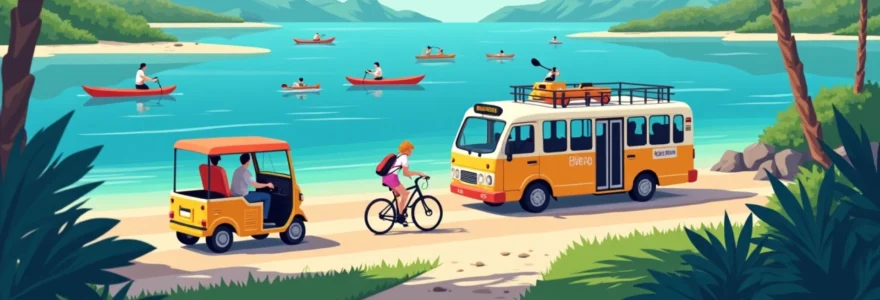
Island destinations offer unique charm and beauty, but navigating them without a personal vehicle can seem daunting. However, embracing alternative transportation methods not only reduces environmental impact but also provides a more immersive travel experience. From eco-friendly electric options to traditional public transit and adventurous alternatives, there are numerous ways to explore islands without relying on a car.
Discovering an island’s hidden gems often requires venturing beyond the typical tourist routes. By utilizing diverse transportation options, travelers can uncover secluded beaches, interact with local communities, and gain a deeper appreciation for the island’s culture and landscape. Let’s explore some of the most effective and enjoyable ways to traverse island destinations car-free.
Sustainable island transportation: electric bicycles and E-Scooters
The rise of electric micro-mobility options has revolutionized island transportation, offering an eco-friendly alternative that’s both fun and efficient. E-bikes and e-scooters provide the perfect balance of speed and maneuverability, allowing visitors to cover significant distances without breaking a sweat.
Eco-friendly E-Bike networks in santorini, greece
Santorini, known for its stunning caldera views and whitewashed buildings, has embraced the e-bike trend with open arms. The island’s hilly terrain, once a challenge for cyclists, is now easily conquered with electric assistance. Several companies offer e-bike rentals, complete with guided tours or self-guided routes that take you through picturesque villages and along coastal paths.
These e-bikes typically have a range of 40-60 kilometers on a single charge, more than enough to explore the island’s 18-kilometer length. Riders can effortlessly pedal from Oia to Akrotiri, stopping at vineyards and black sand beaches along the way. The quiet hum of the electric motor allows for a peaceful journey, enhancing the serene atmosphere of the Greek isles.
Lime and bird scooter sharing systems on hawaii’s big island
Hawaii’s Big Island has seen a surge in e-scooter popularity, with companies like Lime and Bird introducing shared scooter systems in urban areas. These lightweight electric vehicles are perfect for short trips around towns like Hilo and Kona, offering a quick and convenient way to zip between beaches, restaurants, and shops.
Users can easily locate and unlock scooters using smartphone apps, paying by the minute for their rides. With top speeds of about 15 mph, e-scooters provide a breezy alternative to walking in the tropical heat. However, riders should be mindful of local regulations and always wear a helmet for safety.
Solar-powered electric Tuk-Tuks in koh samui, thailand
Koh Samui has taken sustainable transportation a step further with the introduction of solar-powered electric tuk-tuks. These three-wheeled vehicles, a staple of Thai transportation, have been given an eco-friendly makeover. Equipped with solar panels and electric motors, they offer a unique blend of tradition and innovation.
Tourists can hop on these quirky vehicles for short trips around the island, enjoying the open-air experience while contributing to reduced emissions. The solar tuk-tuks are particularly popular for beach-hopping and exploring the island’s night markets, providing a charming and sustainable way to soak in the local atmosphere.
Public transit options: ferries, buses, and trams
While electric options are gaining ground, traditional public transit systems remain the backbone of island transportation. Many islands have invested in comprehensive networks that cater to both locals and tourists, offering affordable and reliable ways to explore.
Vaporetto water bus system in venice, italy
Venice, an archipelago of 118 small islands, relies heavily on its iconic vaporetti or water buses. These vessels are the primary mode of public transportation, plying the city’s canals and connecting various islands. The extensive network covers not only the main tourist areas but also reaches outlying islands like Murano and Burano.
Visitors can purchase multi-day passes that allow unlimited rides, making it easy to hop on and off at different stops. The vaporetto offers a unique perspective of Venice, gliding past historic palazzos and under ornate bridges. It’s an essential part of the Venetian experience, blending practicality with the romance of water travel.
Bermuda’s pink route bus service along south shore
Bermuda’s public bus system is known for its distinctive pink and blue vehicles, with the Pink Route being particularly useful for tourists. This route runs along the picturesque South Shore, connecting major beaches and attractions. Buses are frequent and air-conditioned, providing a comfortable way to explore the island’s coastline.
The Pink Route offers stunning ocean views and stops at popular spots like Horseshoe Bay and Warwick Long Bay. Travelers can purchase day passes or multi-day transportation cards, which also work on ferries. The buses are equipped with bike racks, allowing cyclists to combine modes of transport for a more flexible journey.
Melbourne’s free city circle tram for exploring phillip island
While technically not on Phillip Island itself, Melbourne’s Free City Circle Tram plays a crucial role in connecting visitors to transportation options for exploring the nearby island. This free tram service loops around Melbourne’s central business district, stopping at key transport hubs where travelers can catch buses or trains to Phillip Island.
The vintage W-class trams provide a charming introduction to Melbourne’s public transit system. Once on Phillip Island, visitors can use local shuttle services to reach attractions like the Penguin Parade and the Koala Conservation Centre. This combination of city trams and island shuttles showcases how integrated public transit can enhance the island exploration experience.
Inter-island ferry networks in the greek cyclades
The Greek Cyclades archipelago boasts an extensive ferry network that serves as the lifeline between islands. From high-speed catamarans to traditional ferries, these vessels offer various options for island-hopping adventures. Popular routes connect major islands like Mykonos, Santorini, and Naxos, but also serve smaller, less-visited islands.
Ferries range from basic services to luxurious options with amenities like restaurants and comfortable seating areas. Travelers can purchase single tickets or opt for island-hopping passes that offer flexibility. The ferry journeys themselves become part of the adventure, providing stunning views of the Aegean Sea and the opportunity to spot dolphins or flying fish.
Alternative transportation: kayaks, zip lines, and cable cars
For the more adventurous traveler, islands often offer unique transportation options that double as attractions themselves. These alternative methods not only get you from point A to B but also provide unforgettable experiences along the way.
Sea kayaking tours around palawan’s el nido archipelago
El Nido, located in the Philippines’ Palawan province, is renowned for its crystal-clear waters and limestone cliffs. Sea kayaking has emerged as both a popular activity and a practical way to explore the archipelago’s hidden lagoons and secluded beaches. Many tour operators offer guided kayaking excursions, ranging from half-day trips to multi-day expeditions.
Kayakers can navigate through narrow passages between towering karst formations, accessing areas that larger boats can’t reach. This eco-friendly mode of transport allows for intimate encounters with marine life and provides a unique perspective on El Nido’s stunning geography. It’s a physically engaging way to travel that connects visitors directly with the island’s natural beauty.
Langkawi SkyCab: malaysia’s steepest cable car ride
The Langkawi SkyCab in Malaysia is more than just a means of transportation; it’s a breathtaking journey that offers panoramic views of the island and its surroundings. As one of the steepest cable car rides in the world, it transports visitors from the Oriental Village to the peak of Gunung Machinchang, covering a distance of 2.2 kilometers.
During the ascent, passengers can marvel at the dense rainforest below and catch glimpses of the Andaman Sea. At the top station, a series of suspended skywalks allows for further exploration of the mountain’s summit. The SkyCab not only provides access to hiking trails and viewpoints but also serves as an attraction in its own right, offering a unique perspective on Langkawi’s landscape.
Zip-lining between islands in tonga’s vava’u group
In Tonga’s Vava’u archipelago, a novel form of island-hopping has taken flight: zip-lining. This exhilarating mode of transport connects several small islands, offering thrill-seekers a bird’s-eye view of the tropical paradise below. The zip-line network spans across pristine beaches, lush forests, and turquoise lagoons.
Participants can soar from one island to another, experiencing the rush of flying over water while taking in spectacular coastal scenery. This unique transportation method not only provides an adrenaline rush but also allows access to otherwise hard-to-reach islands and viewpoints. It’s an unforgettable way to experience the beauty of Tonga’s islands from a completely different perspective.
Ride-sharing and taxi apps for island exploration
The digital age has brought ride-sharing and taxi apps to many island destinations, offering convenient and often more affordable alternatives to traditional taxis. These services can be particularly useful for reaching specific locations or for travel during off-hours when public transit might be limited.
Grabtaxi services on bali’s narrow roads
Bali’s narrow, winding roads can be challenging to navigate, but GrabTaxi has emerged as a popular solution for both tourists and locals. This ride-hailing app offers various vehicle options, from motorbikes for quick, traffic-beating trips to cars for longer journeys or group travel.
GrabTaxi’s fixed-price system provides transparency and eliminates the need for haggling, a common concern with traditional taxis. The app’s GPS tracking feature is especially useful in Bali’s sometimes confusing road network, ensuring that drivers can locate passengers even in less touristy areas. It’s an efficient way to reach Bali’s scattered temples, rice terraces, and hidden beaches without the stress of driving yourself.
Uber’s island mode for caribbean destinations
Uber has adapted its services for several Caribbean islands with the introduction of “Island Mode.” This feature takes into account the unique characteristics of island transportation, including popular tourist routes and local preferences. In destinations like Puerto Rico and the Dominican Republic, Uber offers options ranging from standard cars to larger vehicles for group travel.
Island Mode often includes features tailored to tourist needs, such as the ability to request drivers who speak multiple languages or have knowledge of popular attractions. This can be particularly helpful for visitors who want to explore beyond resort areas or seek insider tips on local hotspots. The familiar interface of the Uber app provides a sense of security for travelers in unfamiliar surroundings.
Lyft’s expansion to hawaiian islands: oahu and maui
Lyft has made significant inroads on the Hawaiian islands of Oahu and Maui, offering an alternative to traditional taxis and car rentals. The service has become popular for airport transfers, trips to popular beaches, and exploring urban areas like Honolulu and Lahaina.
On Maui, Lyft has partnered with local drivers who often serve as informal tour guides, sharing insights about the island’s history and culture during rides. In Oahu, the service has proven useful for reaching hiking trailheads or navigating the busy streets of Waikiki. Lyft’s presence on these islands has enhanced transportation options, especially in areas where public transit might be limited or infrequent.
Walking and hiking trails: Pedestrian-Friendly island routes
Sometimes the best way to explore an island is on foot. Many island destinations have developed extensive networks of walking and hiking trails that allow visitors to immerse themselves in the natural beauty and local culture at a leisurely pace.
Cinque terre’s azure trail connecting five italian coastal villages
The Azure Trail, or Sentiero Azzurro, is a famous hiking path that links the five picturesque villages of Cinque Terre along Italy’s Ligurian coast. This 12-kilometer trail offers breathtaking views of the Mediterranean Sea, terraced vineyards, and colorful houses clinging to steep cliffs.
While parts of the trail can be challenging, it remains one of the most popular ways to explore Cinque Terre. Hikers can complete the entire route in about five hours or break it up into shorter segments, using trains to hop between villages. The trail provides access to hidden coves and offers a unique perspective on the region’s dramatic landscape that can’t be experienced from a car or train.
Jeju olle trail: south korea’s 425km coastal path network
Jeju Island, off the southern coast of South Korea, is home to the extensive Jeju Olle Trail network. This series of 21 interconnected routes covers a total of 425 kilometers, circling the island and showcasing its diverse landscapes. From volcanic craters and lush forests to pristine beaches and traditional villages, the trail offers a comprehensive exploration of Jeju’s natural and cultural heritage.
Each section of the trail is well-marked and typically takes 4-5 hours to complete, making it accessible for both casual walkers and serious hikers. The Olle Trail system incorporates existing coastal paths, farm roads, and forest trails, providing an intimate look at island life away from the main tourist areas. It’s an excellent way for visitors to experience Jeju’s UNESCO World Heritage sites and hidden gems at their own pace.
Abel tasman coast track in new zealand’s south island
The Abel Tasman Coast Track, located in Abel Tasman National Park on New Zealand’s South Island, is a 60-kilometer coastal walking trail that showcases some of the country’s most stunning scenery. The track winds through native bush, crosses estuaries, and passes by golden sand beaches and granite cliffs.
While the full track takes 3-5 days to complete, many visitors opt for day walks or water taxi services that allow access to different sections of the trail. The track’s relatively flat terrain makes it accessible to a wide range of fitness levels. Along the way, hikers can spot native wildlife, swim in crystal-clear waters, and stay in Department of Conservation huts or campsites. This pedestrian-only route offers an unparalleled way to experience the natural beauty of New Zealand’s coastal environments.
Exploring island destinations without a car opens up a world of unique experiences and perspectives. From eco-friendly electric options to adventurous alternatives like kayaking and zip-lining, there are countless ways to navigate island landscapes while minimizing environmental impact and maximizing engagement with local cultures and natural beauty. By embracing these diverse transportation methods, travelers can create memorable journeys that go beyond the typical tourist experience, truly immersing themselves in the essence of island life.